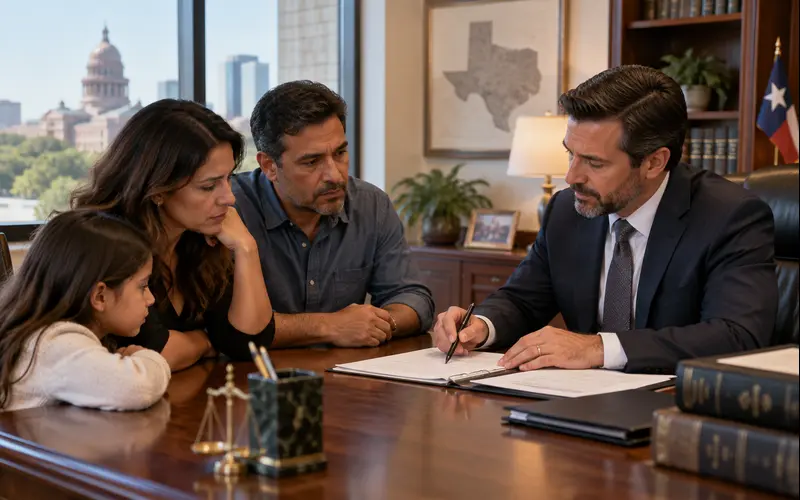
In Texas, the money in a wrongful death lawsuit goes to the surviving spouse, children, and parents of the person who died. These family members share the recovery in whatever proportions a jury decides, or in shares they agree on in a settlement. Siblings, grandparents, and other relatives are not statutory beneficiaries, though they may benefit indirectly through a separate survival action brought by the estate. If you are sorting through Texas wrongful death claims after losing someone, knowing who is entitled to what is one of the first questions to answer.
Two different claims usually arise from the same death, and they pay different people. The wrongful death claim compensates family members for their own losses. The survival claim belongs to the estate and compensates for what the person who died suffered before death. Mixing up the two is one of the most common reasons families misunderstand where a settlement check will go.
This guide explains how Texas law answers the question of who gets paid, how the money is divided, what kinds of damages are available, and the deadlines that apply. It is general information, not legal advice, and every family's situation is different.

Texas limits wrongful death recovery to a short, specific list of family members. The list comes from Chapter 71 of the Civil Practice and Remedies Code, and courts apply it strictly.
Under Tex. Civ. Prac. & Rem. Code § 71.004, a wrongful death action is for the exclusive benefit of the surviving spouse, children, and parents of the deceased. In practice, that means:
• The surviving spouse, including a spouse by informal (common law) marriage if the marriage can be proven.
• Children of the deceased, whether minors or adults, including adopted children.
• Parents of the deceased, including adoptive parents. Parents can recover even when their child was an adult.
Each eligible family member has an individual claim for their own losses. A spouse, an adult daughter, and an elderly father can all be beneficiaries in the same case.
Siblings are not on the list. Neither are grandparents, grandchildren, aunts, uncles, cousins, fiancés, or unmarried partners who were not in a valid informal marriage. This surprises many families, especially when a brother or sister was the closest person in the deceased's life. These relatives cannot bring a wrongful death claim in their own name, although they may receive money through the estate if they are heirs under a will or under Texas intestacy rules.
Section 71.004(b) allows the spouse, children, and parents to sue together, or allows one or more of them to sue for the benefit of all. Texas courts treat this as one lawsuit for the entire group of beneficiaries, so a defendant does not face separate wrongful death suits from each relative. If none of the eligible family members files within three calendar months after the death, the executor or administrator of the estate must bring the action for them, unless all of them ask that it not be brought.
Texas law does not set fixed percentages for each beneficiary. The division depends on whether the case goes to verdict or settles.
Under Section 71.010, the jury awards damages proportionate to the injury resulting from the death, and the award is divided in the shares the jury finds in its verdict among the beneficiaries who are alive at that time. Jurors hear evidence about each relationship. A young child who lost a parent's daily care and financial support for many years may receive a larger share than an adult child who lived independently. A surviving spouse who depended on the deceased's income often receives a significant portion. Shares do not have to be equal.
Most wrongful death cases settle before trial. When all beneficiaries are adults, they and their attorneys typically agree on an allocation that reflects each person's losses. When a beneficiary is a minor, a Texas court usually reviews the settlement and may appoint a guardian ad litem to make sure the child's share is fair. Money for a minor is commonly protected in a court registry, trust, or structured arrangement until the child reaches adulthood, depending on the amount and the court's orders.
Section 71.011 states that damages recovered under this part of the statute are not subject to the debts of the deceased. Wrongful death proceeds go to the family members themselves and are generally protected from the deceased's creditors. Survival action proceeds pass through the estate, so the treatment of those funds can be more complicated. A lawyer and, when needed, a probate attorney can explain how this applies to a particular estate.
Texas wrongful death damages are designed to compensate survivors for what the death took from them. Common categories include:
• Loss of financial support the deceased would have provided.
• Loss of household services, care, and maintenance.
• Loss of companionship, love, comfort, and society.
• Mental anguish suffered because of the death.
• Loss of inheritance, meaning money the deceased likely would have saved and left to the beneficiary.
• Loss of advice, counsel, and guidance, especially for children.
When a death is caused by a willful act, a willful omission, or gross negligence, Section 71.009 allows exemplary damages in addition to actual damages. Our article on punitive damages explains how Texas caps and limits those awards. Fault also matters. Under Texas's proportionate responsibility rules, recovery is reduced by the deceased's share of fault and barred if that share is greater than 50 percent.
Section 16.003(b) gives families two years to file a wrongful death lawsuit, and the clock generally starts on the date of death. A survival action is tied to the underlying injury, so its two-year period usually runs from the date of the injury. If someone was injured in a truck accident and died months later, those two dates can differ. Medical malpractice deaths, claims against government entities, and cases involving minors can follow special rules, so it is wise to speak with an attorney well before any deadline.
Real families rarely fit a simple template. A few situations come up often:
• Blended families: stepchildren who were not legally adopted are generally not statutory beneficiaries, while adopted children are.
• Divorced or estranged parents: both parents can be beneficiaries, but a jury may weigh the closeness of each relationship when assigning shares.
• An adult with no spouse or children: the parents become the only wrongful death beneficiaries, and siblings may share only through the estate.
• Workplace deaths: deaths in a refinery accident or on another industrial site can involve workers' compensation rules that limit some claims against the employer while leaving third-party claims open.
When a family is grieving, sorting out who is entitled to what should not add to the burden. The Daspit Law Firm handles wrongful death cases across Texas on a contingency fee basis, so there are no legal fees unless we win. Our team includes more than 50 attorneys, and the firm has recovered over $500 million for clients. We offer free consultations 24/7 and can meet with families at home or in the hospital.
Founder John Daspit began his career at Fulbright & Jaworski, worked in insurance defense, and devoted thousands of hours to litigation arising from the 2005 BP Texas City Refinery explosion. That background helps us anticipate how insurers and corporate defendants approach fatal injury claims. We work to identify every eligible beneficiary, separate wrongful death and survival damages properly, and fight for an allocation that protects each family member, including children.
If you have questions about who can recover after a loved one's death, we are here to help. Call The Daspit Law Firm toll free at (888) 273-1045 for a free, confidential consultation, available 24 hours a day, 7 days a week.
The surviving spouse, children, and parents of the deceased receive wrongful death damages under Texas Civil Practice and Remedies Code Section 71.004. A jury divides the award in shares it finds fair, or the family agrees on shares in a settlement. Other relatives, such as siblings, can only receive money through the estate's separate survival claim if they are heirs.
No. Texas limits wrongful death claims to the surviving spouse, children, and parents of the person who died. Brothers and sisters cannot bring a wrongful death claim in their own names, even if they were very close to the deceased. A sibling may still receive part of a survival action recovery if they inherit from the estate under a will or Texas intestacy law.
Not necessarily. Texas law does not require equal shares. At trial, the jury decides each beneficiary's share based on that person's losses, such as lost support and companionship. In a settlement, the beneficiaries usually agree on an allocation, and a court often reviews the share for any minor child to make sure it is fair and properly protected.
A wrongful death claim compensates the spouse, children, and parents for their own losses after a death. A survival action is brought on behalf of the estate and recovers what the deceased suffered before dying, such as pain, medical bills, and funeral costs. Survival money goes into the estate and passes to heirs under a will or intestacy law.
Generally two years from the date of death, under Texas Civil Practice and Remedies Code Section 16.003(b). A related survival action usually must be filed within two years of the injury. Special rules can apply in medical malpractice cases, claims against government entities, and cases involving minors, so families should speak with an attorney as early as possible.
All too often, accident victims are steamrolled by insurance companies determined to minimize or deny their claims. Don't let this happen to you. Hire us to fight for the compensation you deserve.


At The Daspit Law Firm, Our Team of Attorneys Handles the Full Range of Personal Injury Cases, Including Car and Truck Accidents, Industrial Accidents, Construction Accidents, Maritime & Offshore Accidents, and Much More.
The information on this website is for general information purposes only. Nothing on this site should be taken as legal advice for any individual case or situation. This information is not intended to create, and receipt or viewing does not constitute, an attorney-client relationship.
© 2026 All Rights Reserved. Privacy Policy, Accessibility, Legal Disclaimer