There is no set timeline for settling after a deposition. Some Texas injury cases settle within weeks of the key depositions, others settle at a court-ordered mediation months later, and some go all the way to trial. The timing depends mostly on how the testimony changed each side's view of the case, whether medical treatment is finished, and when the court's schedule forces a decision. If you were hurt in a car accident or other incident and your deposition is behind you, knowing what comes next can make the wait easier.
A deposition is often a turning point. It is the first time the insurance company's lawyers see you answer questions under oath, and the first time your attorney can lock in the other driver's or company's story. After that, both sides usually have a clearer picture of what a jury might do.
This guide explains how depositions work in Texas civil cases, what happens afterward, and the factors that tend to speed up or slow down a settlement.

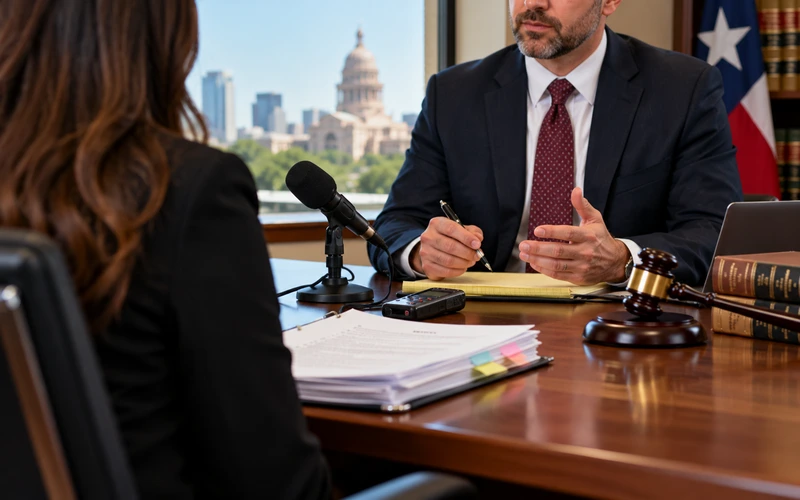
A deposition is sworn testimony given outside the courtroom, usually in a law office or by video conference. Lawyers ask questions, a court reporter records every word, and the testimony can be used later in motions or at trial. It takes place during the pretrial phase in which both sides exchange evidence.
Depositions in Texas state courts are governed by the Texas Rules of Civil Procedure, mainly Rule 199. Some of the most important points for injured people include:
• Time limit: under Rule 199.5(c), no side may question an individual witness for more than six hours, and breaks do not count toward that limit.
• Limited objections: lawyers may generally object only to the form of a question, to leading questions, or to a non-responsive answer, which keeps the testimony moving.
• Instructions not to answer: your lawyer can tell you not to answer only in narrow situations, such as protecting a privilege or stopping an abusive question.
• Remote and video depositions: a deposition can be taken remotely or recorded on video with proper advance notice.
• Overall limits: in many injury cases governed by the Level 2 rules in Rule 190.3, each side has up to 50 total hours of oral depositions of the opposing parties, their experts, and people they control, unless the court changes it.
The injured person and the defendant are almost always deposed. Other common witnesses include eyewitnesses, police officers, treating doctors, company safety managers, and expert witnesses on medical costs, accident reconstruction, or lost earning capacity. In a truck accident case, the driver, dispatcher, and a corporate representative of the trucking company may all be questioned.
Once your deposition ends, several things happen in the background, even if you do not hear much for a while.
1. The court reporter prepares the transcript, which typically takes a few weeks.
2. Under Rule 203.1, you or your attorney receive the transcript and have 20 days to review it, note any corrections with reasons, and sign it.
3. Both legal teams study the testimony and compare it with medical records, photos, and other evidence.
4. The insurer's adjusters and lawyers report to the company on how you came across and how a jury may react.
5. Additional depositions, often of doctors and experts, may follow.
6. Settlement talks resume, frequently leading to mediation.
Texas courts encourage settlement, and many judges require mediation before trial. Under Chapter 154 of the Texas Civil Practice and Remedies Code, a court may refer a pending case to mediation or another form of alternative dispute resolution on its own motion or at a party's request.
At mediation, a neutral mediator meets with both sides, usually in separate rooms, and carries offers back and forth. The mediator cannot force a settlement. If the parties reach a deal and sign a written agreement, Texas law allows a court to enforce it like any other written contract. Mediation often takes place after the key depositions, because by then both sides have the information they need to value the case.
Yes. Many injury claims settle before a lawsuit is ever filed, and others settle after suit is filed but before anyone is deposed. Settling early can save time and stress, but it can also mean accepting less before the evidence is fully developed. Whether an early offer is fair depends on your injuries, the strength of the evidence, and the insurance coverage available. Our article on punitive damages explains another factor that can affect case value when conduct was especially reckless.
Because the deposition can shape the timing and value of a settlement, preparation matters:
• Meet with your lawyer beforehand and review your records and prior statements.
• Listen to each full question, pause, and answer only what was asked.
• Tell the truth, including about prior injuries; inconsistencies hurt more than the facts.
• It is fine to say you do not know or do not remember.
• Stay calm and polite, even if the questions feel personal or repetitive.
Our founder, John Daspit, began his career at Fulbright and Jaworski and also worked in insurance defense, so our team understands how insurers evaluate depositions and settlement. The Daspit Law Firm has more than 50 attorneys, over 15 offices, and over $500 million recovered for clients. We prepare clients carefully for depositions, push cases toward mediation when it helps, and stay ready for trial when it does not. Consultations are free 24/7, we can visit you at home or in the hospital, and you pay no legal fees unless we win. You can meet our attorneys on the team page.
If you are waiting on a settlement after a deposition, or want to know whether an offer is fair, call The Daspit Law Firm toll free at (888) 273-1045. We will give you a straight answer about where your case stands.
There is no standard timeline. Some cases settle within weeks of the key depositions, others at mediation months later, and some go to trial. Timing depends on how the testimony affected each side's view of the case, whether your medical treatment is complete, the strength of the evidence, and deadlines set by the court.
Under Texas Rule of Civil Procedure 199.5(c), no side may examine or cross-examine an individual witness for more than six hours, not counting breaks. In many cases governed by the Level 2 rules in Rule 190.3, each side also has an overall limit of 50 hours of oral depositions, though the court can adjust these limits.
Not by statute in every case, but many Texas courts order mediation before trial. Chapter 154 of the Civil Practice and Remedies Code lets a court refer a pending case to mediation on its own motion or at a party's request. The mediator cannot force a deal, but a signed written settlement agreement is enforceable like a contract.
Most personal injury cases resolve through settlement rather than trial, and depositions are often a turning point because both sides see how witnesses will testify. However, no reliable figure shows exactly how many settle right after depositions. Many settle at mediation or as the trial date approaches, once both sides have fully evaluated the evidence.
Yes. Many claims settle before a lawsuit is filed or before depositions are taken. Settling early can save time, but it may mean accepting less if your injuries or future medical needs are not yet clear. Talk with an attorney about whether an early offer fairly covers your medical bills, lost income, and pain and suffering.
All too often, accident victims are steamrolled by insurance companies determined to minimize or deny their claims. Don't let this happen to you. Hire us to fight for the compensation you deserve.


At The Daspit Law Firm, Our Team of Attorneys Handles the Full Range of Personal Injury Cases, Including Car and Truck Accidents, Industrial Accidents, Construction Accidents, Maritime & Offshore Accidents, and Much More.
The information on this website is for general information purposes only. Nothing on this site should be taken as legal advice for any individual case or situation. This information is not intended to create, and receipt or viewing does not constitute, an attorney-client relationship.
© 2026 All Rights Reserved. Privacy Policy, Accessibility, Legal Disclaimer