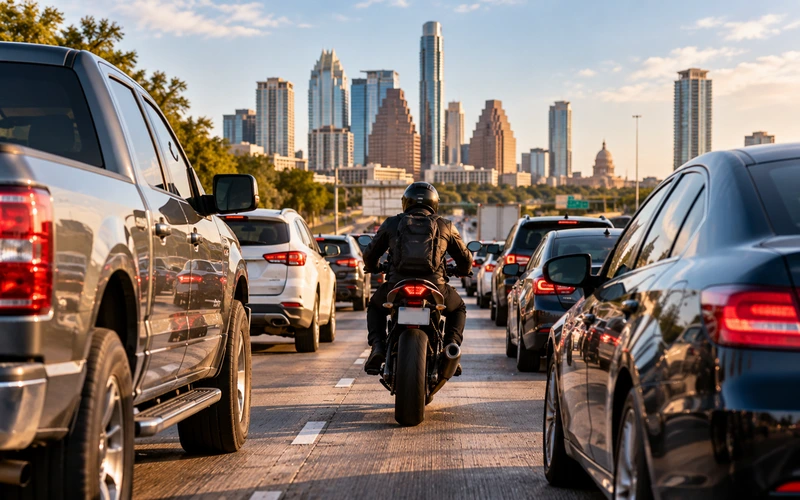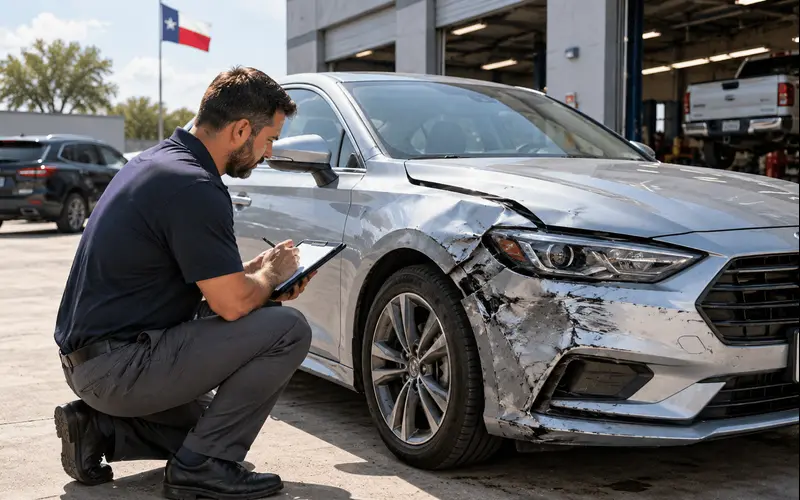
A diminished value claim in Texas asks the at-fault driver's insurance company to pay for the loss in your vehicle's resale value after a crash, even once it has been fully repaired. Texas generally allows these claims against the other driver's insurer as part of your property damage recovery. You usually cannot collect diminished value from your own insurer under a standard Texas personal auto policy if your car has been properly repaired. If a crash left you with a car worth less than before, a car accident lawyer can help you pursue the full value of your loss.
Many drivers never ask for diminished value because the insurer does not offer it. Adjusters typically pay for repairs and a rental car, then close the file. Yet a vehicle with an accident on its history report often sells or trades for less than an identical car with a clean record, and that difference is a real financial loss.
This guide explains how a diminished value claim works in Texas, the legal limits that apply, why insurers' preferred formula often undervalues these claims, and the steps to document and pursue yours.

Diminished value is the difference between what your vehicle was worth right before the accident and what it is worth after repairs. Buyers and dealers pay less for cars with accident histories because they worry about hidden damage, frame problems, and future reliability. A diminished value claim seeks payment for that gap.
• Inherent diminished value: the loss in market value simply because the car now has an accident history, even after quality repairs. This is the most common type of claim.
• Repair-related diminished value: additional loss caused by poor or incomplete repairs, such as mismatched paint or non-factory parts.
• Immediate diminished value: the drop in value right after the crash and before repairs, which matters mostly if a vehicle is sold in its damaged state.
Many insurers calculate diminished value using a method called the 17c formula, which traces back to a Georgia class action involving State Farm. It works like this:
1. Start with the car's pre-accident value from a pricing guide.
2. Cap the base loss at 10 percent of that value.
3. Multiply by a damage factor from 0.00 (no structural damage) to 1.00 (severe structural damage).
4. Multiply again by a mileage factor from 1.00 (under 20,000 miles) down to 0.00 (100,000 miles or more).
For a $30,000 car with minor damage and 45,000 miles, the formula yields only $450. Critics argue that the 10 percent cap is arbitrary, that the damage scale ignores how buyers actually react to accident history, and that the mileage factor can wipe out a claim entirely for higher-mileage vehicles that still have real market value. Texas law does not require any particular formula. You can challenge a 17c offer with market evidence showing what your car is actually worth now.
A strong claim rests on evidence, not estimates. Follow these steps:
1. Confirm liability: get the crash report and make sure the other driver's insurer has accepted fault or that you can prove it. Our guide on filing a police report explains how to request one.
2. Finish repairs first: diminished value is easiest to measure once repairs are complete.
3. Collect repair records: keep the final invoice, parts list, photos, and any notes on structural or frame repairs.
4. Get an independent appraisal: a qualified appraiser can compare your car's pre-loss value to its post-repair market value using local sales data.
5. Gather market proof: dealer trade-in offers, comparable listings, and vehicle history reports showing the accident can all support your number.
6. Send a written demand: include a cover letter, the appraisal, repair summary, and the amount you are requesting.
7. Read any release carefully: a broad release can waive your diminished value claim, so do not sign until it is resolved or expressly reserved.
Under Tex. Civ. Prac. & Rem. Code 16.003, suits for damage to property generally must be filed within two years. That same two-year period applies to personal injury claims from the crash, though the two can follow different timelines in practice. If you settle the property damage portion early, make sure the paperwork does not release any injury claims you still have.
Texas also follows a modified comparative fault rule under Chapter 33 of the Civil Practice and Remedies Code. If you share some blame for the crash, your recovery is reduced by your percentage of fault, and you cannot recover if you are more than 50 percent responsible.
Diminished value tends to be most significant for newer cars, luxury and high-value vehicles, and cars with structural or frame damage. It can also matter a great deal for work trucks and motorcycles. If you were hurt in a motorcycle crash or a collision with a commercial vehicle, the property claim is often only one part of a larger case. Our page on recovery from insurance explains how to protect both claims.
Insurance companies handle diminished value claims every day, and they know most drivers will accept the first offer. The Daspit Law Firm helps accident victims across Texas push back. Our team of more than 50 attorneys has recovered over $500 million for clients, and we work on a contingency fee, so you pay no legal fees unless we win. We offer free consultations 24/7 and can meet you at home or in the hospital.
Founder John Daspit worked in insurance defense earlier in his career, so our attorneys understand how adjusters evaluate property and injury claims. When a crash also causes injuries, we pursue the full value of both, including medical bills, lost wages, and pain and suffering.
If your car lost value after a crash that was not your fault, call The Daspit Law Firm toll free at (888) 273-1045. Your consultation is free and confidential, and we answer calls 24 hours a day, 7 days a week.
Yes. Texas generally allows you to file a diminished value claim against the at-fault driver's insurance company as part of your property damage recovery. You must show the other driver caused the crash and prove how much value your car lost. Claims against your own insurer usually fail if your car was fully and properly repaired.
In most cases, you have two years to file a lawsuit for damage to property under Texas Civil Practice and Remedies Code Section 16.003. It is best to raise diminished value with the insurer soon after repairs are finished, and before signing any release, since a broad release can waive the claim entirely.
Usually not. The Supreme Court of Texas held in 2003 that under the standard Texas personal auto policy, an insurer that fully and adequately repairs your vehicle does not also owe diminished value. You may have a claim if repairs were inadequate or your policy language is different, so review your policy carefully.
Many insurers use the 17c formula, which caps the loss at 10 percent of the car's pre-accident value and then reduces it based on damage severity and mileage. Texas does not require that formula. An independent appraisal comparing your car's value before the crash and after repairs, supported by local market data, often produces a more accurate figure.
It often is for newer, low-mileage, or high-value vehicles, and for cars with structural or frame damage, because the drop in resale value can be substantial. For older cars with very high mileage, the loss may be small. An independent appraisal can help you decide whether the potential recovery justifies the effort.
All too often, accident victims are steamrolled by insurance companies determined to minimize or deny their claims. Don't let this happen to you. Hire us to fight for the compensation you deserve.


At The Daspit Law Firm, Our Team of Attorneys Handles the Full Range of Personal Injury Cases, Including Car and Truck Accidents, Industrial Accidents, Construction Accidents, Maritime & Offshore Accidents, and Much More.
The information on this website is for general information purposes only. Nothing on this site should be taken as legal advice for any individual case or situation. This information is not intended to create, and receipt or viewing does not constitute, an attorney-client relationship.
© 2026 All Rights Reserved. Privacy Policy, Accessibility, Legal Disclaimer