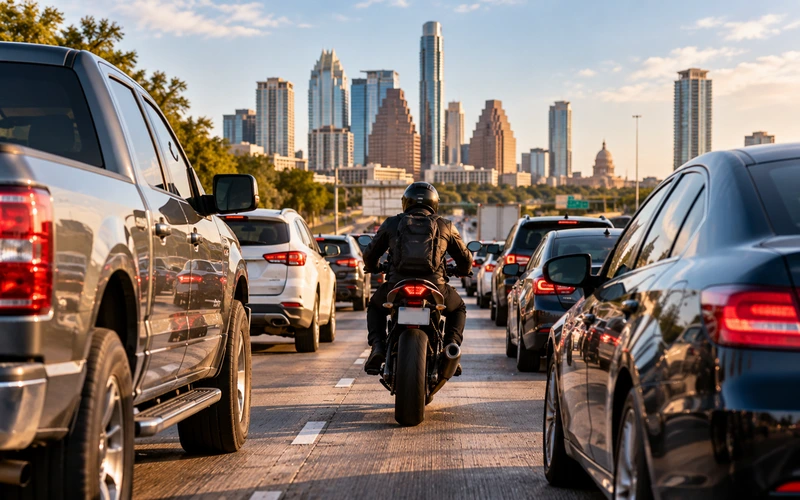
No, lane splitting is not legal in Texas. Since September 1, 2023, Texas Transportation Code Section 545.0605 has expressly barred motorcycle riders from operating between lanes of traffic moving in the same direction, and that ban covers both lane splitting in moving traffic and lane filtering through stopped cars. If you ride in Texas and were hurt in a crash, understanding this rule matters, because insurers often raise it in motorcycle accident claims even when the rider did nothing wrong.
Lawmakers have filed bills to allow a limited form of filtering several times, but none has passed. The most recent attempt, House Bill 2957 in 2025, never made it out of committee. That means the rules described below are the ones Texas riders live with today.
Even if a rider was splitting lanes when a crash happened, that does not automatically end an injury claim. Texas decides fault by percentage, and a driver who made an unsafe lane change, opened a door, or failed to look may carry most of the blame.

The two terms are often used as if they mean the same thing, but most state laws treat them differently.
• Lane splitting: riding a motorcycle between two lanes of traffic that is still moving, usually on a highway during slow or congested traffic.
• Lane filtering: riding between stopped or nearly stopped vehicles, often to reach the front of the line at a red light.
• Lane sharing: two motorcycles riding side by side in a single lane, which Texas does allow.
Texas law does not draw a line between splitting and filtering. Both involve riding between lanes of traffic going the same direction, and both are prohibited.
Two parts of the Texas Transportation Code work together on this issue: a general lane rule for every driver and a newer rule written just for motorcycles.
Texas Transportation Code Section 545.060 requires drivers on a road with clearly marked lanes to stay as nearly as practical entirely within one lane and to change lanes only when it is safe. For years, officers relied on this general rule to cite riders who split lanes, but the statute did not mention motorcycles by name.
House Bill 4122, signed on June 12, 2023, and effective September 1, 2023, added Section 545.0605. In plain terms, it says a motorcycle rider is entitled to the full use of a lane and other vehicles may not crowd a rider out of it. Two motorcycles may ride side by side in one lane. A rider may not ride more than two abreast, may not operate between lanes of traffic moving in the same direction, and may not pass a vehicle while in the same lane as that vehicle. Police officers performing official duties are exempt from the passing restrictions.
Texas has considered change before. House Bill 813 in 2015 and Senate Bill 273 in 2019 would have allowed motorcycles to move between vehicles in congested traffic under certain conditions, and both died in committee. In 2025, House Bill 2957 proposed narrow filtering on divided highways with slow or stopped traffic. It was referred to the House Transportation Committee in March 2025 and never received a vote. The Legislature's next regular session begins in 2027.
A rider who was splitting lanes can still recover damages in many cases. What matters is who caused the crash and by how much.
Texas follows a modified comparative fault system in Chapter 33 of the Civil Practice and Remedies Code. A jury assigns each party a percentage of responsibility. An injured person's damages are reduced by their share, and a person found more than 50 percent responsible cannot recover anything. So if a rider was 20 percent at fault for splitting lanes and the driver was 80 percent at fault for a sudden, unsignaled lane change, the rider can still recover 80 percent of their damages.
Insurance companies know that many people already hold a bias against motorcyclists. They may claim a rider was splitting lanes when they were not, or argue that splitting was the only cause of the crash. A violation of a traffic statute can be used as evidence of negligence, but the driver's own conduct still counts. Common driver errors in these crashes include:
• Changing lanes without checking mirrors or blind spots.
• Swerving or crowding a rider on purpose, which Section 545.0605 prohibits.
• Opening a car door into traffic.
• Driving while texting or otherwise distracted.
• Following too closely or braking suddenly without cause.
Helmet camera and dash camera video, witness statements, the police report, damage patterns on both vehicles, and phone records can all show where the motorcycle actually was and what the driver did. Getting a report on file quickly helps, and our guide on how to file a police report covers the basics. Texas generally allows two years from the crash date to file a personal injury lawsuit under Civil Practice and Remedies Code Section 16.003.
Because splitting is not legal here, riders and drivers share the job of keeping lanes predictable:
1. Riders: stay in your lane, even in stop-and-go traffic, and use lane position to stay visible.
2. Riders: wear bright gear and a DOT-compliant helmet to improve visibility and protection.
3. Drivers: check mirrors and blind spots twice before changing lanes; motorcycles are easy to miss.
4. Drivers: give riders a full lane, since Texas law entitles them to it.
5. Everyone: keep extra following distance, because motorcycles can stop faster than cars.
Serious motorcycle crashes often cause catastrophic injuries such as traumatic brain injuries, spinal cord damage, and amputations. When a crash is fatal, families may have a wrongful death claim under Texas law.
Motorcycle cases often turn on the details of fault, and we fight to make sure riders are judged fairly. The Daspit Law Firm has more than 50 attorneys, over 15 offices across Texas and neighboring states, and over $500 million recovered for clients. We offer free consultations 24/7, can meet you at home or in the hospital, and handle cases on contingency, so you owe no legal fees unless we win.
If you were hurt in a motorcycle crash and the insurance company is blaming you, call The Daspit Law Firm toll free at (888) 273-1045. We will listen, review the evidence, and explain your options in plain English.
No. Texas Transportation Code Section 545.0605, in effect since September 1, 2023, prohibits motorcycle riders from operating between lanes of traffic moving in the same direction. The ban applies to both lane splitting in moving traffic and lane filtering through stopped cars. Riding two motorcycles side by side in one lane is still allowed.
No. Texas does not separate filtering from splitting. Moving between stopped cars at a light still means riding between lanes of same-direction traffic, which Section 545.0605 prohibits. A 2025 bill, House Bill 2957, would have allowed limited filtering on divided highways, but it died in committee without a vote.
California is the only state that allows full lane splitting in moving traffic, and Minnesota now allows splitting at low speeds. Utah, Arizona, Colorado, and Montana allow filtering under strict speed and traffic conditions. Most other states, including Texas, prohibit riding between lanes. Laws change, so check current rules before riding in another state.
Often, yes. Texas uses proportionate responsibility, so a jury assigns fault by percentage. Your damages are reduced by your share, and you can recover as long as you are not more than 50 percent responsible. If the driver made an unsafe lane change or was distracted, they may carry most of the blame.
No. Section 545.0605 gives a motorcycle rider the right to full use of a lane, and other motor vehicles may not be driven in a way that takes that use away. A driver who crowds, squeezes, or swerves at a rider may be violating the law, and that conduct can be used as evidence of fault after a crash.
All too often, accident victims are steamrolled by insurance companies determined to minimize or deny their claims. Don't let this happen to you. Hire us to fight for the compensation you deserve.


At The Daspit Law Firm, Our Team of Attorneys Handles the Full Range of Personal Injury Cases, Including Car and Truck Accidents, Industrial Accidents, Construction Accidents, Maritime & Offshore Accidents, and Much More.
The information on this website is for general information purposes only. Nothing on this site should be taken as legal advice for any individual case or situation. This information is not intended to create, and receipt or viewing does not constitute, an attorney-client relationship.
© 2026 All Rights Reserved. Privacy Policy, Accessibility, Legal Disclaimer