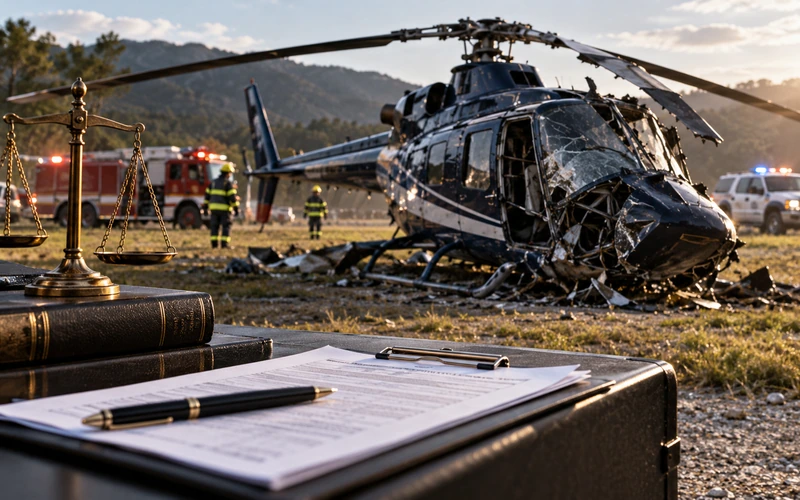
In the early morning hours of April 29, 2025, a work platform gave way high on a concrete storage tank at the Port Arthur LNG construction site, sending three workers to their deaths and injuring two others. For the families left behind and for every worker on Texas industrial projects, the tragedy raises hard questions about safety, accountability, and legal rights. A construction accident lawyer can help answer those questions while the facts are still being uncovered.
Scaffold and elevated platform failures are among the most dangerous events on any job site. When a platform collapses at height, workers have little or no chance to protect themselves, and the results are often fatal.
This article explains what has been reported about the Port Arthur LNG scaffolding collapse, what investigators and the contractor have said about the cause, and what Texas law allows injured workers and grieving families to do next.

The Port Arthur LNG export terminal is a multibillion dollar project being built by Sempra Infrastructure along the Sabine-Neches Ship Channel, with Bechtel serving as the engineering, procurement, and construction contractor. Thousands of people work on the project.
Shortly before 2 a.m. that Tuesday, a five person crew was performing a formwork jump on a liquefied natural gas containment tank. In this process, a layered system of concrete forms and work platforms is lifted and reset higher on the tank wall so the next section of concrete can be poured. According to ENR's report on the investigation, a platform layer failed while the crew was setting the final section of the shift, and three workers fell an estimated 65 to 85 feet. Two died at the scene and a third died later at a hospital. The other two crew members were rescued from the structure and treated for non-life-threatening injuries.
Bechtel called it a tank jump form system incident and suspended work at the site. OSHA opened an inspection, and the victims' families and survivors later filed lawsuits against the contractors and the project owner.
In October 2025, trade publications reported on Bechtel's own investigation. The company said a bracket connecting the platform to a cone screw anchored in the tank wall was not securely attached, which made the platform unstable. As reported by Construction Dive, the report also listed contributing factors:
• The three workers who died appear not to have had fall arrest lanyards tied to an approved anchor point, while the two survivors did.
• Crew members lacked adequate training on the formwork jumping system.
• Experienced crew members and leadership were not physically present.
• The company's mentoring policy for new crew members was not followed.
• Night work increased risk because of darkness, fatigue, and reduced supervision.
These are the company's own findings, not a court ruling. Independent experts, OSHA records, and the evidence gathered in litigation may tell a fuller story.
OSHA requires fall protection for construction workers at heights of six feet or more, and the OSHA scaffolding safety page notes that scaffold falls can be controlled through compliance with its standards. When collapses happen anyway, the causes usually trace back to choices made by companies, not workers. Common factors include:
• Platforms, brackets, or anchors that are not properly installed or checked
• Missing inspections by a qualified or competent person before each shift
• Inadequate or unused fall protection systems and anchor points
• Rushed schedules, night shifts, and fatigue
• Poor training and too few experienced supervisors on site
• Defective formwork or scaffold components
Repeated or serious safety failures can also lead to OSHA violations, which may support a negligence claim even though OSHA itself does not pay compensation to victims.
Large industrial projects involve owners, general contractors, subcontractors, and equipment suppliers. Which claims are available depends on who employed the worker and which companies controlled the work.
If the direct employer carries Texas workers' compensation, benefits are generally the exclusive remedy against that employer for an on the job injury. There is an important exception for fatal accidents: a surviving spouse and the worker's children may pursue exemplary damages against the employer when the death resulted from gross negligence or an intentional act. If the employer is a workers' compensation non-subscriber, the worker can sue the employer directly for negligence.
The exclusive remedy rule protects only the employer. Project owners, other contractors, engineering firms, and the makers of defective formwork or scaffold parts can still be sued if their negligence contributed to the collapse. In Texas, you can recover as long as you are not more than 50 percent at fault, and your damages are reduced by any share of fault assigned to you.
Under Chapter 71 of the Texas Civil Practice and Remedies Code, the surviving spouse, children, and parents of a worker killed by negligence can bring a wrongful death claim for lost financial support, loss of companionship, mental anguish, and funeral costs. A separate survival claim can recover what the worker could have claimed had he lived. Most of these suits must be filed within two years of the death.
Some large contractors require workers to sign arbitration agreements as part of their employment paperwork. ENR reported that Bechtel has sought arbitration in at least one of the Port Arthur LNG cases. These clauses can change where and how a claim is heard, so have a lawyer review any documents you signed.
A successful claim can cover past and future medical expenses, lost wages and lost earning capacity, physical pain, mental anguish, disfigurement, and physical impairment. Families can also recover funeral and burial costs and the loss of the love, guidance, and financial support their loved one would have provided. When a company acted with gross negligence, a jury may also award exemplary damages, which are meant to punish dangerous conduct and are capped in most cases under Chapter 41.
Industrial accidents in Southeast Texas are not limited to construction sites. Our article on the Port Arthur refinery explosion covers similar rights for plant and refinery workers hurt in the same community.
Whether you were hurt or lost a family member, these steps help protect a future claim:
1. Get complete medical care and keep every record and bill.
2. Report the injury to your employer in writing and request a copy.
3. Write down names of coworkers, supervisors, and witnesses while memories are fresh.
4. Keep pay stubs, work schedules, training records, and any employment or arbitration agreements.
5. Do not sign releases or give recorded statements to an insurer before speaking with an attorney.
6. Contact a lawyer quickly so the platform components and site records can be preserved.
Founder John Daspit began his career at Fulbright and Jaworski and worked in insurance defense, so he knows how large companies and their insurers defend workplace death cases. He also devoted 7,000 to 8,000 hours to litigation over the 2005 BP Texas City Refinery explosion, one of the most significant industrial disasters in Texas history.
With more than 50 attorneys, over 15 offices including Beaumont and Houston, and over $500 million recovered for clients, our firm has the resources to stand up to major contractors. We serve families in Port Arthur and across Southeast Texas, offer free consultations 24/7, and can meet you at home or in the hospital. We work on a contingency fee, so you owe no legal fees unless we win.
If you were injured or lost a loved one in the Port Arthur LNG scaffolding collapse or another construction site accident, we are ready to fight for you. Call The Daspit Law Firm toll free at (888) 273-1045 or contact us online for a free, confidential consultation. This article is for general information only and is not legal advice.
Bechtel's internal investigation blamed a bracket that was not securely attached to a cone screw anchoring a jump form platform to the tank wall. The company also cited inadequate training, missing experienced supervision, night work risks, and fall arrest lanyards that were not tied off. These are the contractor's findings, and litigation may reveal more.
Yes, in many cases. Families can bring wrongful death and survival claims against negligent third parties such as project owners, other contractors, and equipment makers. If the employer carries workers' compensation, the spouse and children may still seek exemplary damages from the employer when the death was caused by gross negligence.
Not completely. Workers' compensation is usually the only remedy against your direct employer if it subscribes to the Texas system. You can still sue other companies whose negligence caused the fall. If your employer is a non-subscriber, you can sue it directly, and it loses defenses such as blaming you or a coworker.
Generally two years. Texas Civil Practice and Remedies Code 16.003 sets a two-year limit for personal injury claims from the date of injury and for wrongful death claims from the date of death. Arbitration agreements and other factors can affect timing, so talk with a lawyer as soon as possible.
No. OSHA can inspect the site, issue citations, and impose penalties, but it does not award money to injured workers or families. Compensation comes through workers' compensation benefits or a civil lawsuit. OSHA findings and records, however, can be valuable evidence in proving that a company failed to follow safety rules.
All too often, accident victims are steamrolled by insurance companies determined to minimize or deny their claims. Don't let this happen to you. Hire us to fight for the compensation you deserve.


At The Daspit Law Firm, Our Team of Attorneys Handles the Full Range of Personal Injury Cases, Including Car and Truck Accidents, Industrial Accidents, Construction Accidents, Maritime & Offshore Accidents, and Much More.
The information on this website is for general information purposes only. Nothing on this site should be taken as legal advice for any individual case or situation. This information is not intended to create, and receipt or viewing does not constitute, an attorney-client relationship.
© 2026 All Rights Reserved. Privacy Policy, Accessibility, Legal Disclaimer